

Do you constantly find yourself taking charge of everyone else’s emotional needs, schedules, and problems, only to feel exhausted, unappreciated, and deeply burnt out?
In clinical psychology, this habit is known as emotional over-functioning. It occurs when you systematically take responsibility for the emotions, choices, and well-being of others while neglecting your own fundamental boundaries and health.
Over-functioning often looks like high competence, extreme reliability, and kindness on the surface. You are the partner who manages every household detail, the colleague who fixes everyone else’s mistakes, or the friend who is always available for a crisis.
However, beneath this helpful exterior lies a survival mechanism rooted in anxiety, control, and people-pleasing. When left unaddressed, chronic over-functioning leads directly to emotional exhaustion, physical fatigue, and resentment in your personal and professional relationships.
Understanding Bowen Family Systems Theory
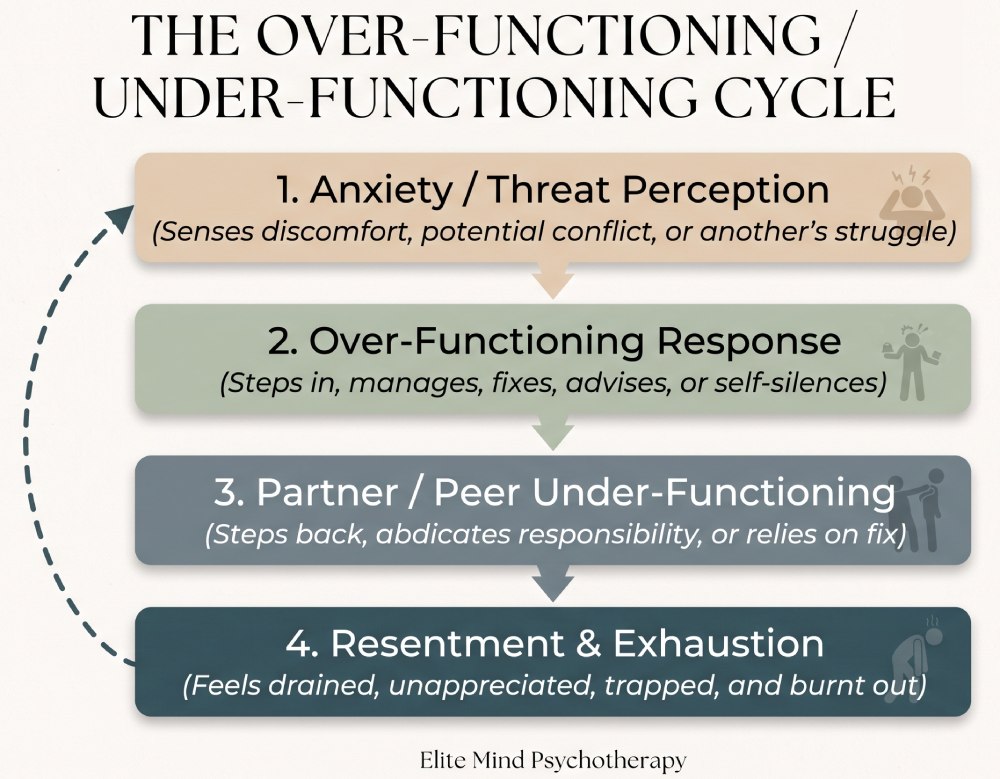
The concept of over-functioning originates from Bowen Family Systems Theory, developed by psychiatrist Dr. Murray Bowen. Bowen observed that in any relational system, such as a family, romantic partnership, or workplace, anxiety creates an imbalance in functioning.
When systemic anxiety rises, one person tends to over-function by managing the situation, making decisions, and absorbing emotional tension. In response, another person tends to under-function by retreating, becoming passive, or allowing the over-functioning individual to shoulder the burden.
- The Over-Functioner: Driven by an internal belief that “If I don’t handle this, everything will fall apart.” They confuse control with safety and struggle to let others face natural consequences.
- The Under-Functioner: Relies on the over-functioner to navigate decisions, manage logistics, or resolve emotional discomfort, gradually losing confidence in their own competence.
This dynamic creates a self-reinforcing cycle. The more the over-functioner fixes, the less the under-functioner develops self-efficacy, reinforcing the over-functioner’s belief that they must do everything themselves.
The Physical and Psychological Toll
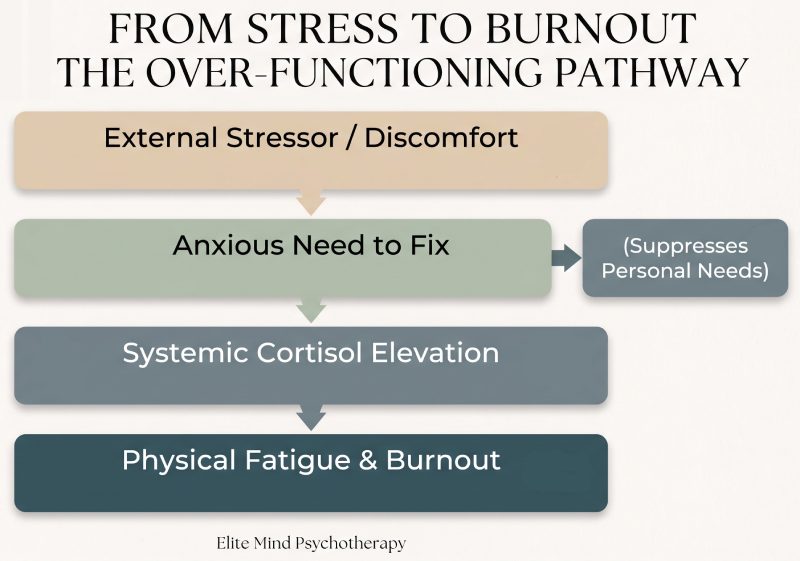
Over-functioning is a significant driver of chronic stress and professional burnout. When your nervous system remains in a perpetual state of vigilance, scanning environments for other people’s discomfort, it inflicts a heavy physical and mental toll.
- Cognitive Load: Constant mental tracking of other people’s needs depletes executive function, reducing your capacity for focus, creativity, and deep rest.
- Physical Symptoms: Chronic elevation of stress hormones like cortisol contributes to persistent fatigue, muscle tension, digestive issues, and disrupted sleep patterns.
- Relational Resentment: Over-time, over-functioning turns into quiet resentment. You feel trapped by responsibilities you voluntarily took on, bitter that others are not offering the same level of care in return.
Over-Functioning vs. Genuine Care
It is essential to distinguish between healthy, empathetic caregiving and anxiety-driven over-functioning. The difference lies in the underlying motivation and respect for personal boundaries.
| Dynamic Feature | Healthy Care & Connection | Anxiety-Driven Over-Functioning |
| Core Motivation | Desire to support and connect out of love or mutual respect. | Anxiety-driven urge to control outcomes or avoid conflict and discomfort. |
| Respect for Autonomy | Allows others to make their own choices, face mistakes, and solve problems. | Steps in prematurely to fix, advise, or rescue others from discomfort. |
| Self-Awareness | Maintains awareness of personal energy limits and honors boundaries. | Ignores personal fatigue, illness, and needs to keep fixing things. |
| Relational Impact | Builds mutual trust, equality, and shared responsibility over time. | Creates codependency, resentment, and an uneven distribution of labor. |
Breaking the Cycle: Practical Steps to Shift Out of Over-Functioning
Shifting away from over-functioning requires tolerating the temporary anxiety that arises when you stop managing everything around you. Here are practical strategies to begin restoring balance:
- Pause Before Responding: When faced with someone else’s problem or emotional discomfort, practice pausing before offering advice, intervention, or help. Ask yourself: “Is this my problem to solve?”
- Distinguish Between Empathy and Intervention: You can validate someone’s feelings without fixing their problem. Practice saying: “That sounds really difficult. I trust you will figure out how to handle it.”
- Identify Your Internal Triggers: Notice the physical sensations in your body when anxiety arises (e.g., tight chest, racing heart). Recognize that your urge to fix is an attempt to soothe your own internal discomfort, not just help the other person.
- Practice Tolerating Other People’s Discomfort: Allowing loved ones, colleagues, or partners to experience distress or natural consequences is necessary for their growth and your emotional recovery.
- Utilize Structured Therapeutic Skills: Modalities like Dialectical Behaviour Therapy (DBT) provide practical tools for emotional regulation, interpersonal effectiveness, and distress tolerance, helping you set firm boundaries without guilt.
Reclaiming Your Energy at Elite Mind Psychotherapy
Breaking long-standing habits of people-pleasing and over-functioning takes intentional effort, self-compassion, and practical guidance. Learning to set healthy boundaries and step back from fixing others allows you to restore your personal well-being and build healthier, more balanced relationships.

At Elite Mind Psychotherapy in Burlington, Ontario, Registered Psychotherapist Roneldi Feaver (MA, BSc Hon., RP) offers dedicated support for individuals navigating emotional burnout, chronic stress, and relationship imbalances. Through services such as Burnout & Stress Management and evidence-based Dialectical Behaviour Therapy (DBT), clients learn to regulate their nervous systems, establish clear boundaries, and reclaim their peace of mind.
Practice Information
- Therapist: Roneldi Feaver, MA, BSc Hon., RP (CRPO Registration #: 008085)
- Practice: Elite Mind Psychotherapy
- Address: 895 Maple Avenue, Burlington, ON, L7S 2H7
- Phone: 905-301-4281
- Email: roneldif@gmail.com
- Care Options: In-person therapy in Burlington & virtual sessions across Ontario
- Hours: Monday to Friday, 9:00 AM to 7:30 PM
If over-functioning and people-pleasing have left you feeling drained and disconnected from yourself, reach out to Elite Mind Psychotherapy today to schedule a consultation and begin your recovery from burnout.